
Even a successful season isn't everything, as the story of Plymouth Women shows

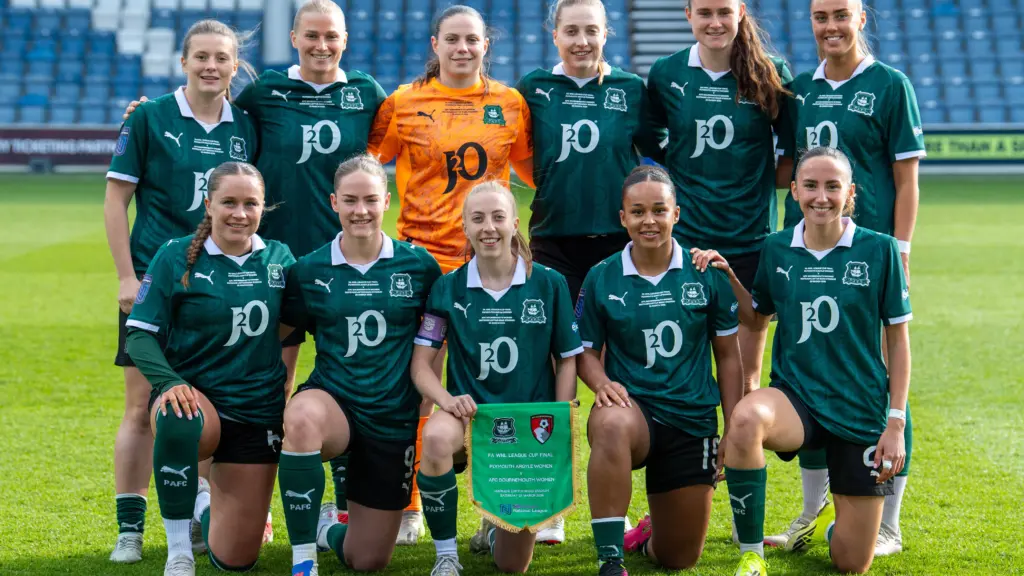
England is the pioneer of women’s football and sets an example in many areas. It is where investment continues to grow, and the Women’s Super League is often presented as proof of how far the women’s game can progress. Yet even in the country of the reigning two-time European champions, not everything is perfect as the recent case involving third-tier side Plymouth Argyle Women highlighted.
In some ways, the situation echoes the recent controversy surrounding French club Dijon. Once again, this is not only about finances. It is about the value women’s teams hold for their clubs when sporting success collides with economic reality.
Plymouth Argyle Women, meanwhile, enjoyed a successful season. The team finished second in the FA Women’s National League Southern Premier Division, reached the League Cup final, and narrowly missed out on promotion to the second tier, with Wolverhampton ultimately coming out on top in a closely fought battle. In terms of results, it was one of the most successful seasons in the club’s history.
Success is not enough
But even that was not enough to convince the club’s leadership that its players deserved more. Most of the squad received an email informing them that their contracts would not be renewed for the following season. The women’s team budget was set to be significantly reduced, and the club decided to take a different direction.
The players subsequently released a joint statement in which they criticised not only the decision itself but, above all, the way it was communicated. They described it as cold, impersonal, and lacking any space for dialogue. At the same time, head coach Marie Hourihan, who had guided the team to its historic achievements, also resigned.
The club later stated that the decision was linked to the long-term financial sustainability of the project. Club officials argued that while the season had been exceptionally successful on the pitch, it had also proved more financially demanding than expected. Promotion to a higher division would have brought new sources of funding, but after narrowly missing out, continuing with the existing model was no longer considered viable.
The biggest paradox
Women’s football in England is often portrayed as a story of continuous growth, with the country serving as a model for others where the women’s game is still in its early stages and only moving towards England’s level in baby steps. However, beneath the elite divisions lies a very different reality. Clubs in the third and fourth tiers often operate with limited budgets, rely heavily on support from their parent clubs, and any change in financial circumstances can have immediate consequences.
The Plymouth case therefore highlights one of the biggest paradoxes in modern women’s football. Success alone may not be enough. A team can win matches, attract new supporters, and build a community, yet still find itself facing uncertainty about its future within a matter of days.
Plymouth Argyle Women are unlikely to disappear. The club has repeatedly stated its commitment to women’s football and says it is working on a new vision for the team. Nevertheless, the story leaves behind an uncomfortable question. If even a historically successful season cannot guarantee stability, what does a long-term commitment to women’s football actually mean?
That is the essence of the entire controversy. It serves as a reminder that the growth of women’s football cannot be measured solely through attendances, television deals, or record-breaking crowds. Real progress will only be visible when support for women in football does not disappear at the first major budget cut.
More Videos & Highlights
Watch the moments behind the story.
 1 min QB Originals QB ORIGINALS | LISAN ALKEMADE: PSV Eindhoven Goalkeeper on How Mainstream Media Treat Women's Football Goalkeepers
 1 min QB Originals QB Originals | QB Break with Franny Černá | Coffee, Football & Life in Prague
 1 min QB Originals QB ORIGINALS | “We Celebrated Like We Won the World Cup” — Klára Cahynová on Beating Barcelona
 4 min Off The Pitch Focus on the pitch, relax in the paddock: These footballers are F1 enthusiasts
 4 min Strong Story No longer a choice: Motherhood in modern women’s football
 2 min QB Originals QB ORIGINALS | BÁRA VOTÍKOVÁ — First Czech Woman at Arsenal. On & Off the Pitch
 1 min QB Originals QB ORIGINALS | First Game. New Country. Hattrick. Hallie Bergford Story
 1 min The Best Actions NWSL expansion sides suffer defeats in season debuts
 1 min QB Originals QB ORIGINALS | SUE SMITH — A True Pioneer of the Women’s Game
 Elena Schiavo: The Italian rebel who changed the rules of the game
 She could become an ice hockey player, but instead she is Sweden's captain. The story of Kosovare Asllani
 Home again! The Lionesses became back to back European champions one year ago
 From the bottom of the table to the top: The story of the 2026 Utah Royals
 World Champion and women's football ally. The story of Borja Iglesias and why his voice mattered
 Vivianne Miedema turns 30: Let's recall this special player and dutch icon of women's football
 Leah Williamson's Journey to the 2027 World Cup: An Injury-Plagued Season Won't Stop England's Beloved Captain
 Explore more from The Pulse
Keep discovering more stories from women's football.