How Arsenal won the Champions League, part one
Autor: Kristina Němcová (@stinanemcova)
"It's Arsenal. It's Arsenal. Champions of Europe!" These words became iconic on May 24, 2025. They were uttered by the commentator of the DAZN streaming platform, which broadcast the Champions League final.
It’s a fairytale story. Hardly anyone believed in Arsenal. And we are not talking only about the final. The London side, which last lifted the big-eared trophy in 2007, almost didn’t even make it into the main competition. They lost several times in the group stage, and in the playoffs they were on the brink more than once — twice they had to come from behind. But let’s start from the beginning.
Unlike Barcelona, the winners of the 2023 and 2024 editions, or their biggest city rivals Chelsea, Arsenal had to fight their way into the competition through the qualifying rounds. They dealt with Scotland’s Rangers quite comfortably at home, winning 6–0. Facing Norway’s Rosenborg was more difficult — they advanced to the final qualifying round only thanks to an early goal from Frida Maanum.
The final qualifying tie followed, with Swedish runners-up BK Häcken awaiting Arsenal. The London giants went into the first leg in Gothenburg as favourites… and lost. That meant the Gooners went into the return leg with a one-goal deficit. But on home soil Arsenal’s players did not falter, winning convincingly 4–0.
Arsenal thus earned another chance to play in the Champions League. They regularly reach at least the group stage, but they last won the title in 2007, when women’s football was still at a completely different level and the competition itself looked very different. One thing remains true, though: in women’s football, Arsenal are the only English team to have won the Champions League.
Dreams come true
“I would love so much to win the Champions League,” Alessia Russo says, almost dreamily, to her teammates Leah Williamson and Beth Mead. The latter two have been at the club for a long time and are symbols of it for the fans. Especially Williamson, who joined Arsenal at the age of eight and has never played for another team. Both of them nod back at Russo with the same dreamy look. It sounds more like wishful thinking, something they long for. If only they knew what would happen just a few months later.
However, Arsenal were not considered among the favourites. Barcelona, winners of the last two editions, were eyeing a hat-trick. And Chelsea, Arsenal’s biggest rival, made no secret of their ambition to lift the big-eared trophy either — they even brought in two reinforcements from Barcelona and centre-back Naomi Girma from the NWSL, who at the time was the most expensive signing.
And so the group stage began. It works differently today, but last season the group stage still consisted of four groups of four teams, with each team playing one home and one away match. Arsenal were drawn into Group C alongside German champions Bayern, Juventus, and Norway’s Vålerenga.
The important thing is to get up and move on
Given that two teams advanced from each group into the playoffs, Arsenal were the favourites to finish top of their group. And that’s exactly what happened — though even here, the road was far from smooth.
Arsenal’s first match was away to Bayern. The Gooners fought hard, even opened the scoring and later managed to equalise, but they returned to London with a brutal 2–5 defeat, including a hat-trick from long-time Chelsea stalwart Pernille Harder. They improved their spirits at home against Vålerenga with a 4–1 win, and they were thinking of a similar result against the on-paper weaker Juventus.
Although they thrashed Juventus 4–0 in Turin, they struggled to score in the home return leg. When it looked like the Bianconere would walk away with a point, Arsenal’s pride was saved by substitute Lina Hurtig. She came on in the 80th minute and, in the 89th — at the very last moment — scored the long-awaited goal.
From then on, Arsenal didn’t slip again — they even avenged the humiliating loss to Bayern, taking all three points from the return meeting with a 3–2 win. They advanced to the quarterfinals — the knockout stage — from first place in the group. But they did so with several stumbles along the way, which is why few saw them as favourites for the future European title. After all, clubs like Barcelona, Chelsea, and Lyon had been flawless and dominant in their performances.
And as for what the playoffs looked like — where Arsenal had to overturn a two-legged tie twice — we’ll talk about that next time.
More Videos & Highlights
Watch the moments behind the story.
 1 min QB Originals QB ORIGINALS | LISAN ALKEMADE: PSV Eindhoven Goalkeeper on How Mainstream Media Treat Women's Football Goalkeepers
 1 min QB Originals QB Originals | QB Break with Franny Černá | Coffee, Football & Life in Prague
 1 min QB Originals QB ORIGINALS | “We Celebrated Like We Won the World Cup” — Klára Cahynová on Beating Barcelona
 4 min Off The Pitch Focus on the pitch, relax in the paddock: These footballers are F1 enthusiasts
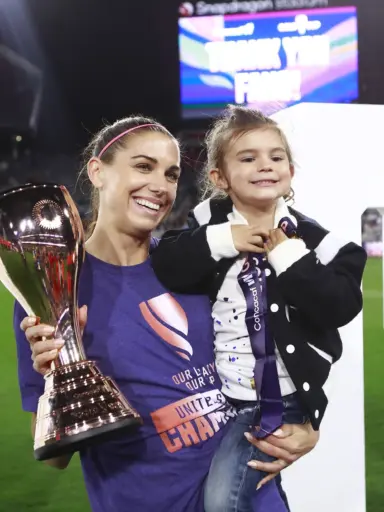 4 min Strong Story No longer a choice: Motherhood in modern women’s football
 2 min QB Originals QB ORIGINALS | BÁRA VOTÍKOVÁ — First Czech Woman at Arsenal. On & Off the Pitch
 1 min QB Originals QB ORIGINALS | First Game. New Country. Hattrick. Hallie Bergford Story
 1 min The Best Actions NWSL expansion sides suffer defeats in season debuts
 1 min QB Originals QB ORIGINALS | SUE SMITH — A True Pioneer of the Women’s Game
 Elena Schiavo: The Italian rebel who changed the rules of the game
 She could become an ice hockey player, but instead she is Sweden's captain. The story of Kosovare Asllani
 Home again! The Lionesses became back to back European champions one year ago
 From the bottom of the table to the top: The story of the 2026 Utah Royals
 World Champion and women's football ally. The story of Borja Iglesias and why his voice mattered
 Vivianne Miedema turns 30: Let's recall this special player and dutch icon of women's football
 Leah Williamson's Journey to the 2027 World Cup: An Injury-Plagued Season Won't Stop England's Beloved Captain
 Explore more from The Pulse
Keep discovering more stories from women's football.